Ashiatsu vs Deep Tissue: Which Massage Goes Deeper
Ashiatsu reaches 2-3x the depth of hand-based deep tissue at $90-$180 per 60 min. See pressure, cost, and which modality suits you. Compare.
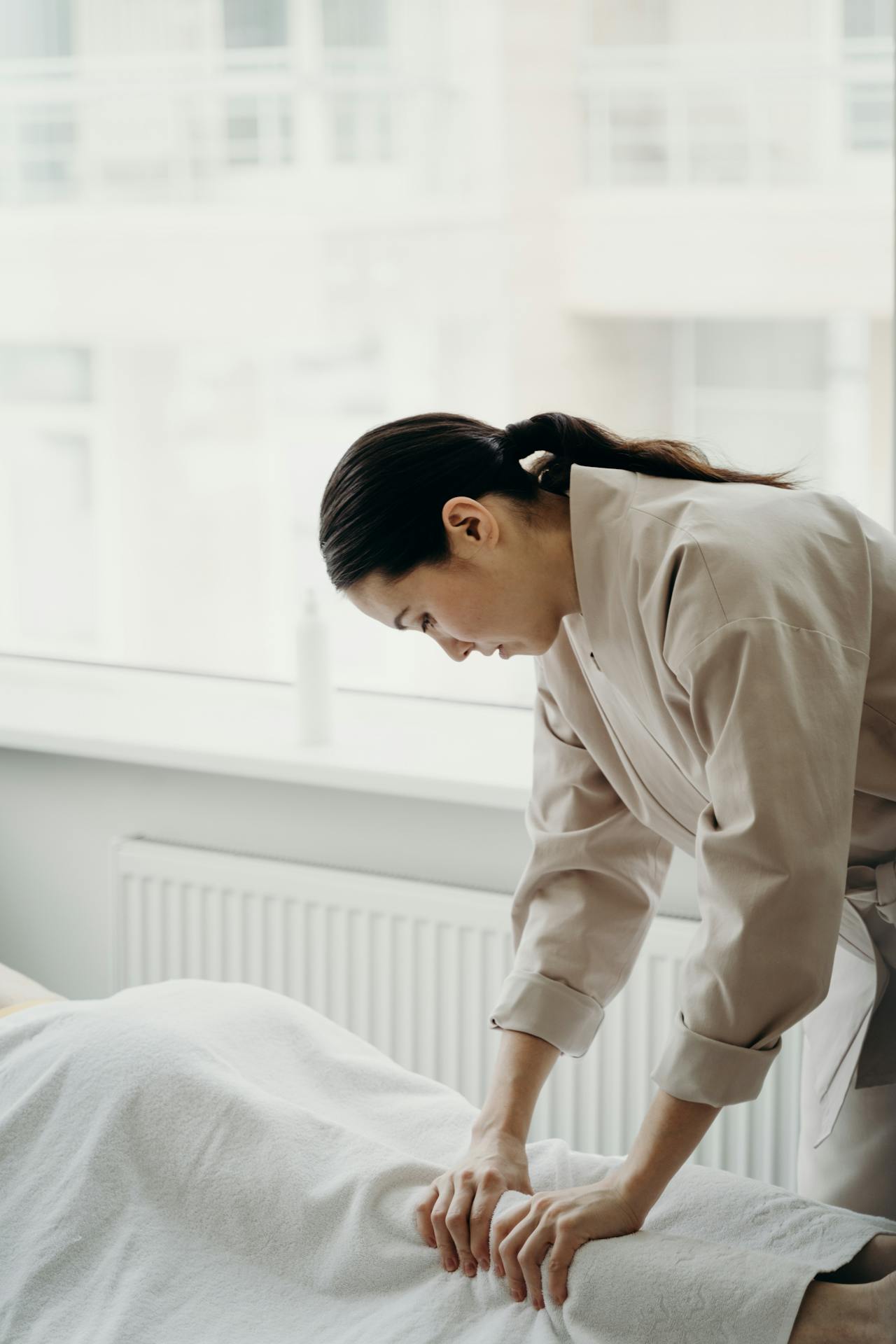
Ashiatsu vs deep tissue — which actually goes deeper?
Ashiatsu massage uses a Licensed Massage Therapist's feet (with overhead bars for balance) to deliver broad, gliding pressure that can reach 2 to 3 times the depth of hand-based deep tissue without the sharp bite. Deep tissue massage, by contrast, uses fingers, forearms, and elbows to target specific knots and trigger points. Ashiatsu averages $90 to $180 per session in 2026; deep tissue runs $80 to $150.
Medically reviewed by Karen Whitfield, LMT, NCBTMB — May 2026.
What is ashiatsu massage?
Ashiatsu, sometimes called "barefoot massage" or Ashiatsu Oriental Bar Therapy, is a Japanese-rooted modality where a trained LMT walks across or kneels on the client's back, using overhead parallel bars to control body weight. The therapist works lubricated skin with bare feet, delivering gliding compression instead of point pressure. The technique was modernized for clinical practice in the US in the 1990s and is now offered by roughly 6% of LMTs in Zoca's massage and bodywork directory of 2,400+ providers across 90 cities.
The signature feel is broad, even, deeply warming compression — closer to being pressed than poked.
What is deep tissue massage?
Deep tissue is a hand-based modality that uses slow strokes and direct deep pressure on specific muscle layers, fascia, and trigger points. The therapist progressively works from superficial layers to deep, often pausing on dense knots, ischemic bands, or postural restrictions. It is the most common "intensive" massage in the US, offered by virtually every studio in our deep tissue and Swedish guide.
The signature feel is targeted, sometimes uncomfortable, often described as "good hurt."
Ashiatsu vs deep tissue at a glance
| Feature | Ashiatsu | Deep tissue |
|---|---|---|
| Tools used | LMT's feet, overhead bars | Fingers, forearms, elbows, thumbs |
| Pressure style | Broad, gliding compression | Targeted, point-specific |
| Effective depth | 2–3× hand-massage depth | Deep but localized |
| Pressure feel | Heavy but spread out | Sharp, focused |
| Best for | Whole-back tension, athletes | Specific knots, postural pain |
| Average cost (60 min, 2026) | $90 – $180 | $80 – $150 |
How they differ in pressure and depth
Ashiatsu pressure is delivered through gravity — the therapist controls weight by gripping overhead bars, applying anywhere from 30% of body weight (light) to nearly full weight (deep). The contact surface is the foot's broad arch, which lets the LMT travel along long muscle groups (rhomboids, lats, paraspinals, glutes, hamstrings) without the localized digging sensation that hand-based work creates.
Deep tissue pressure is delivered through skeletal leverage. Therapists use elbows for direct point pressure and forearms for slow gliding. Depth is high, but the contact surface is narrow, which is why it can feel sharp on dense trigger points. This is also why deep tissue more often produces next-day soreness — typical incidence is 30 to 45% of clients per ABMP survey data.
Pricing in 2026 — what each session actually costs
Costs vary by region. National pricing as of May 2026 from our directory:
| Service | Price range | Duration | Best for |
|---|---|---|---|
| Ashiatsu (60 min) | $90 – $180 | 60 min | Whole-back tension |
| Ashiatsu (90 min) | $135 – $250 | 90 min | Athletes, full-body sessions |
| Deep tissue (60 min) | $80 – $150 | 60 min | Targeted knots, postural pain |
| Deep tissue (90 min) | $120 – $220 | 90 min | Chronic pain, layered work |
| Hybrid ashi + deep tissue | $110 – $210 | 60–75 min | Both broad release and trigger work |
NYC, LA, and SF run 30 to 50% above the national midpoint. Tipping is customary at 18 to 22% in both modalities.
Who ashiatsu works best for
Ashiatsu fits four groups consistently. First, athletes and lifters with diffuse muscular tension across the entire back and posterior chain — the broad gliding pressure is hard to replicate with hands. Second, anyone who has tried deep tissue and found the elbow work too pinpoint or sharp. Third, clients carrying postural tension from desk work who want a full longitudinal flush instead of trigger-point dwell time. Fourth, people who like the feel of hot stone massage — both styles emphasize broad heat and weight.
It tends not to suit clients on blood thinners (the broad pressure can bruise), pregnant clients past the first trimester, anyone with osteoporosis, or anyone with active disc herniation without medical clearance.
Who deep tissue works best for
Deep tissue suits clients with specific complaints — a stuck right trap, a reactive piriformis, a tight upper-quad band — that benefit from minutes of dwell time on a single trigger. It is also the standard modality for postural correction work that follows physical therapy or chiropractic care. The American Massage Therapy Association cites musculoskeletal pain as the top reason 47% of US adults book massage in 2026, and deep tissue is by far the most-requested modality for that complaint.
Aftercare, soreness, and how to recover
Both modalities create some level of post-session soreness. Drink 16 to 24 ounces of water in the two hours after, walk lightly for 20 to 30 minutes if possible, and avoid hard training for 24 hours. Heat helps after ashiatsu (broad muscular response); ice helps after deep tissue if a specific area is acutely sore (focal inflammation). Per PubMed-indexed massage research, session benefits compound when paired with mobility work, walking, and adequate sleep — not when the soreness is "pushed through" with another session inside 48 hours.
How to choose between the two
Ask three questions:
If you're stuck between the two and the studio offers a 60-minute hybrid, that's the most informative first session — you'll know within 15 minutes which feel suits your nervous system.
Safety, training, and what credentials matter
Ashiatsu requires specialized certification beyond an LMT license — the Ashiatsu Oriental Bar Therapy training program is the most-recognized in the US. Verify your therapist's credentials before booking. Both modalities should be performed by a state-licensed LMT with NCBTMB board certification preferred for clinical or athletic work.
Avoid any provider who pressures you into deeper pressure than you've requested, who works through sharp pain rather than around it, or who skips a basic intake including medications and pre-existing conditions. Per ABMP guidance, an intake form should include blood-thinner status, recent surgeries, pregnancy, and any neurological symptoms.
Bottom line — ashiatsu vs deep tissue
Choose ashiatsu when you want a deeply warming, full-back release without the trigger-point dwell time. Choose deep tissue when you have a specific knot, ischemic band, or postural restriction you want worked. Both modalities cost in the same range — pick by feel, not by price. For vetted, state-licensed therapists in your city, search the Massage Near Me directory.
Explore More Beauty & Wellness Resources
Looking beyond massage therapy? These trusted directories can help you find related services:
Frequently asked questions
Is ashiatsu massage actually safe?
How much does ashiatsu massage cost in 2026?
Does deep tissue massage really go deeper than Swedish?
Which is better for athletes — ashiatsu or deep tissue?
Will deep tissue massage make me sore the next day?
How often should you get ashiatsu massage?
Is ashiatsu the same as Thai massage?
Can pregnant women get deep tissue or ashiatsu massage?
What should I tell my LMT before a deep tissue session?
Does insurance cover deep tissue massage?
Need a provider in Nationwide?
Browse our directory and book directly with local businesses.
Browse the directoryRelated articles
Best Massage in Arizona — 2026 Guide
Everything you need to know about massage & bodywork in Arizona — from choosing the right service to finding providers locals actually recommend. Pricing, FAQs, and booking links included.
Best Massage in Atlanta, GA — 2026 Guide
Everything you need to know about massage & bodywork in Atlanta, GA — from choosing the right service to finding providers locals actually recommend. Pricing, FAQs, and booking links included.
Best Massage in California — 2026 Guide
Everything you need to know about massage & bodywork in California — from choosing the right service to finding providers locals actually recommend. Pricing, FAQs, and booking links included.