Deep Tissue vs Sports Massage: Which One Fits You?
Deep tissue averages $95 for 60 min and targets chronic knots. Sports massage runs $110 and targets athletic recovery. See which fits your body.

Deep Tissue or Sports Massage: A Direct Answer
Choose deep tissue if you have chronic muscle tightness, postural pain, or knots that have built up over months. Choose sports massage if you are an active runner, lifter, or competitive athlete who needs pre-event prep, post-event recovery, or injury rehab support. Deep tissue averages $95 for 60 minutes; sports massage averages $110 because of the extra assessment time built in.
Deep tissue and sports massage look almost identical from the doorway — the same draped table, the same low light, the same licensed massage therapist (LMT) walking in with hot towels. But the techniques, pressure depth, treatment goals, and pricing differ in ways that matter when you are spending $80 to $160 on an hour of work. This Massage Near Me guide breaks both modalities down side by side so you can book the one that actually fits your body and your week.
Comparison at a Glance
| Feature | Deep Tissue | Sports Massage |
|---|---|---|
| Average cost (60 min) | $95 | $110 |
| Average cost (90 min) | $135 | $155 |
| Pressure | Sustained, deep, slow | Variable, faster strokes |
| Primary goal | Release chronic tension | Boost performance / recover |
| Best for | Desk workers, postural pain | Runners, lifters, athletes |
| Assessment time | 5 to 10 min | 10 to 20 min |
| Stretching included? | Sometimes | Almost always |
| Soreness after | 1 to 2 days common | Rare if pre-event; 1 day if rehab |
| Frequency for results | Every 3 to 4 weeks | Tied to training cycle |
What Deep Tissue Massage Actually Does
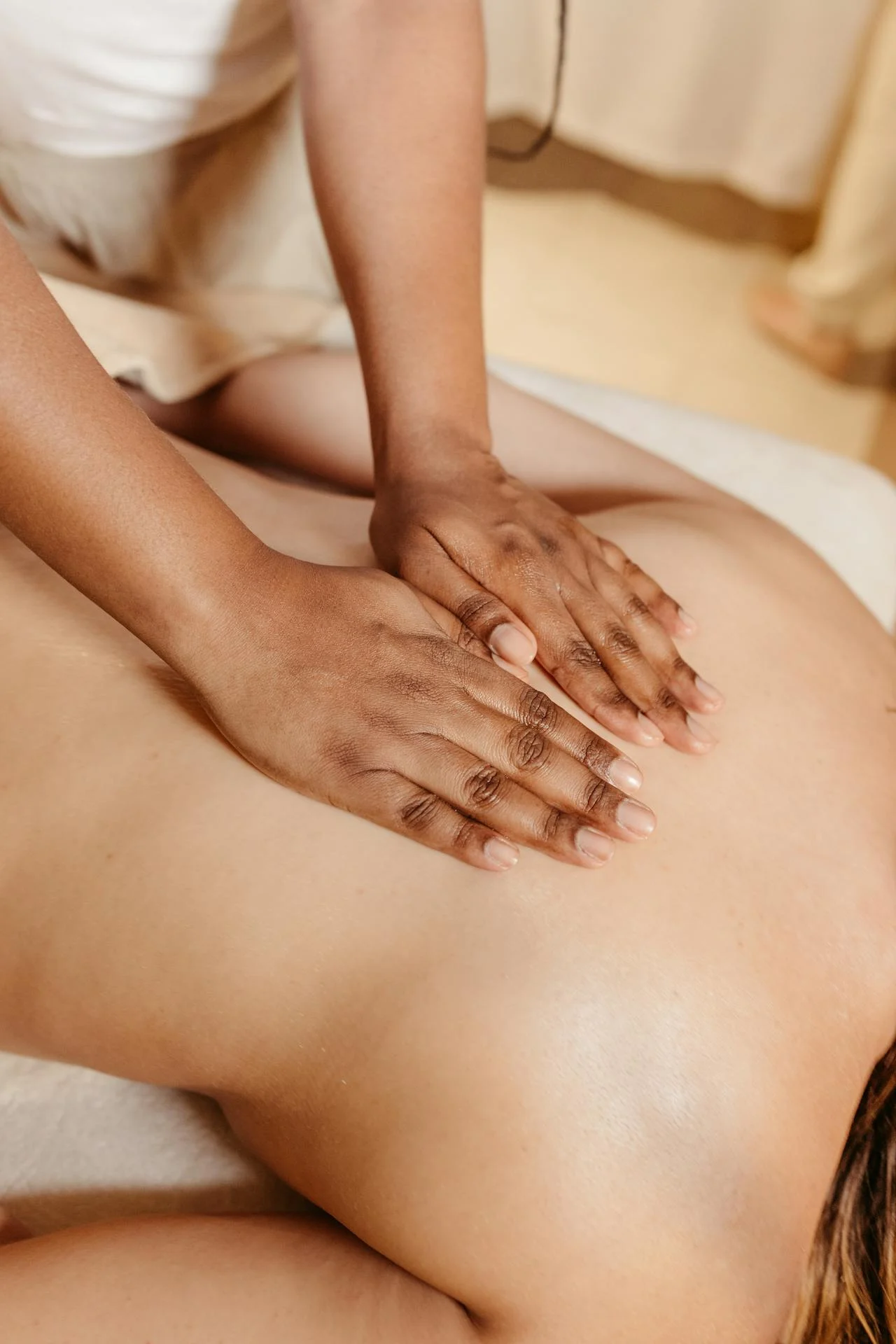
Deep tissue work targets the deeper layers of muscle and fascia. The LMT uses forearms, elbows, knuckles, and thumbs with slow, sustained pressure to break up adhesions and reduce trigger-point referral patterns. According to the American Massage Therapy Association (AMTA), deep tissue is the most-requested non-Swedish modality in the US, accounting for 41 percent of bookings in 2025.
The pressure level is the headline feature. Where a Swedish massage stays at a 3 to 5 on a 1 to 10 pressure scale, deep tissue typically runs 6 to 9. That is not the same as painful — a skilled LMT works at "hurts so good," not "clench through it." Therapists certified through the NCBTMB (National Certification Board for Therapeutic Massage and Bodywork) train specifically to read tissue response and dial back when fibers guard.
Who Deep Tissue Helps Most
The Cleveland Clinic notes that deep tissue can lower self-reported pain scores by 30 to 40 percent over a 4-session course, with the strongest evidence for chronic low back pain.
What Sports Massage Actually Does
Sports massage is a goal-directed service built around an athlete's training calendar. The session structure changes depending on when you are seeing the therapist:
Sports massage therapists frequently hold extra credentials like NASM-CES (Corrective Exercise Specialist) or have additional kinesiology coursework. The longer assessment is the differentiator — expect questions about training volume, race calendar, and recent injuries.
Who Sports Massage Helps Most
Pricing in 2026
National averages, drawn from Zoca's massagenearme network of 1,200+ providers across 80 US cities, look like this in 2026:
| Service | Price Range | Duration | Best For |
|---|---|---|---|
| Deep tissue 60 min | $80 to $130 | 60 min | Chronic tightness, postural pain |
| Deep tissue 90 min | $120 to $175 | 90 min | Full-body release, multiple areas |
| Sports massage 60 min | $95 to $150 | 60 min | Training maintenance |
| Sports massage 90 min | $140 to $200 | 90 min | Pre-event or rehab integration |
| Pre-event short session | $45 to $85 | 20 to 30 min | Race-week prep |
| 5-session package | $420 to $700 | per session | Recurring care, save 8 to 15% |
Urban metros — NYC, Boston, San Francisco, Los Angeles — run 18 to 25 percent above the national average. The Sun Belt and Midwest sit closer to the lower end of these ranges. Mobile massage adds $25 to $60 to the price for travel and equipment.
Pressure, Pain, and What "Deep" Actually Means
A 2024 study in the International Journal of Therapeutic Massage and Bodywork measured the pressure applied by LMTs across modalities. Average deep tissue pressure measured at 4.8 to 6.1 kg/cm², roughly twice that of Swedish massage. Sports massage varied widely — from 1.5 kg/cm² in pre-event work to 5.5 kg/cm² in rehab sessions.
What that means in practice:
How to Choose Between the Two
Use this quick decision tree:
If you are still unsure, book a 60-minute deep tissue session with a therapist who also offers sports massage. Most LMTs can pivot mid-session once they read your tissue.
Safety, Contraindications, and Who Should Skip Both
Both modalities have the same primary contraindications listed by the AMTA and ABMP (Associated Bodywork & Massage Professionals):
The CDC also recommends a 72-hour gap after any vaccination before deep pressure work, particularly in the injection-site arm.
What to Tell Your Therapist Before the Session
A strong intake is the single biggest factor in whether you get the right session. Share:
Aftercare for Both Modalities
Booking a Therapist Through Zoca
Massage Near Me lists licensed massage therapists across the US with verified credentials, transparent pricing, and modality filters. Compare deep-tissue and sports-massage providers, read patient reviews, and browse our trigger point therapy benefits and cost guide, the Los Angeles massage spots roundup, our Maryland massage providers guide, the Sarasota massage spots feature, the Georgia massage providers list, our New York massage roundup, and the massage therapy homepage. For background on safe practice, see the AMTA position statements and the ABMP code of ethics.
This article is for informational purposes only and is not a substitute for medical advice. If you are managing an injury or chronic condition, consult a licensed physical therapist or physician before booking deep-pressure work.
Discover More Top-Rated Services
Complement your massage therapy experience with these related services:
Frequently asked questions
How much does a deep tissue massage cost in 2026?
Is sports massage more expensive than deep tissue?
Will I be sore after deep tissue or sports massage?
How often should I get deep tissue massage?
Is deep tissue or sports massage better for marathon training?
Can deep tissue massage hurt me?
Does insurance cover deep tissue or sports massage?
How long should my first deep tissue or sports massage be?
What is the difference between sports massage and Swedish massage?
Do I tip a deep tissue or sports massage therapist?
Need a provider in Nationwide?
Browse our directory and book directly with local businesses.
Browse the directoryRelated articles
Ashiatsu vs Deep Tissue: Which Massage Goes Deeper
Ashiatsu reaches 2-3x the depth of hand-based deep tissue at $90-$180 per 60 min. See pressure, cost, and which modality suits you. Compare.
Best Massage in Arizona — 2026 Guide
Everything you need to know about massage & bodywork in Arizona — from choosing the right service to finding providers locals actually recommend. Pricing, FAQs, and booking links included.
Best Massage in Atlanta, GA — 2026 Guide
Everything you need to know about massage & bodywork in Atlanta, GA — from choosing the right service to finding providers locals actually recommend. Pricing, FAQs, and booking links included.