Myofascial Release vs Trigger Point: Pain Therapy Pick
Myofascial release averages $115/hr and works on fascia sheets; trigger point runs $95/hr and targets knots. See which is right for your pain. Compare.

Myofascial Release vs Trigger Point: Which One Should You Book?
Myofascial release works best for diffuse, all-over tightness that crosses muscle groups, while trigger point therapy is the precision tool for a single referring "knot" you can point to with one finger. The first averages $115 per 60-minute session in 2026, the second $95. Most pain patterns benefit from a four-session protocol that combines both — typically two sessions of MFR followed by two sessions of trigger point work.
Massage therapy in the United States has grown into a $25 billion industry, with the American Massage Therapy Association (AMTA) reporting that 39 percent of US adults received at least one massage in 2025 for pain management. As demand has grown, the two most-requested clinical modalities — myofascial release (MFR) and trigger point therapy (TPT) — get conflated, mis-booked, and over-billed. This guide makes the distinction concrete.
At a Glance: MFR vs Trigger Point in 2026
| Factor | Myofascial Release | Trigger Point Therapy |
|---|---|---|
| Average US cost (60 min) | $115 | $95 |
| Pressure style | Sustained, slow, no oil | Direct, ischemic compression, sometimes elbow |
| Best for | Diffuse stiffness across regions | One identifiable referring knot |
| Typical session length | 60 to 90 minutes | 30 to 60 minutes |
| Discomfort level (1–10) | 2 to 4 | 5 to 8 |
| Soreness next day | Mild, 24 hrs | Moderate, 24 to 72 hrs |
| Sessions for noticeable change | 3 to 6 | 2 to 4 |
| Common credential | LMT + John F. Barnes MFR certification | LMT + NCBTMB-recognized TPT certification |
What Myofascial Release Actually Is
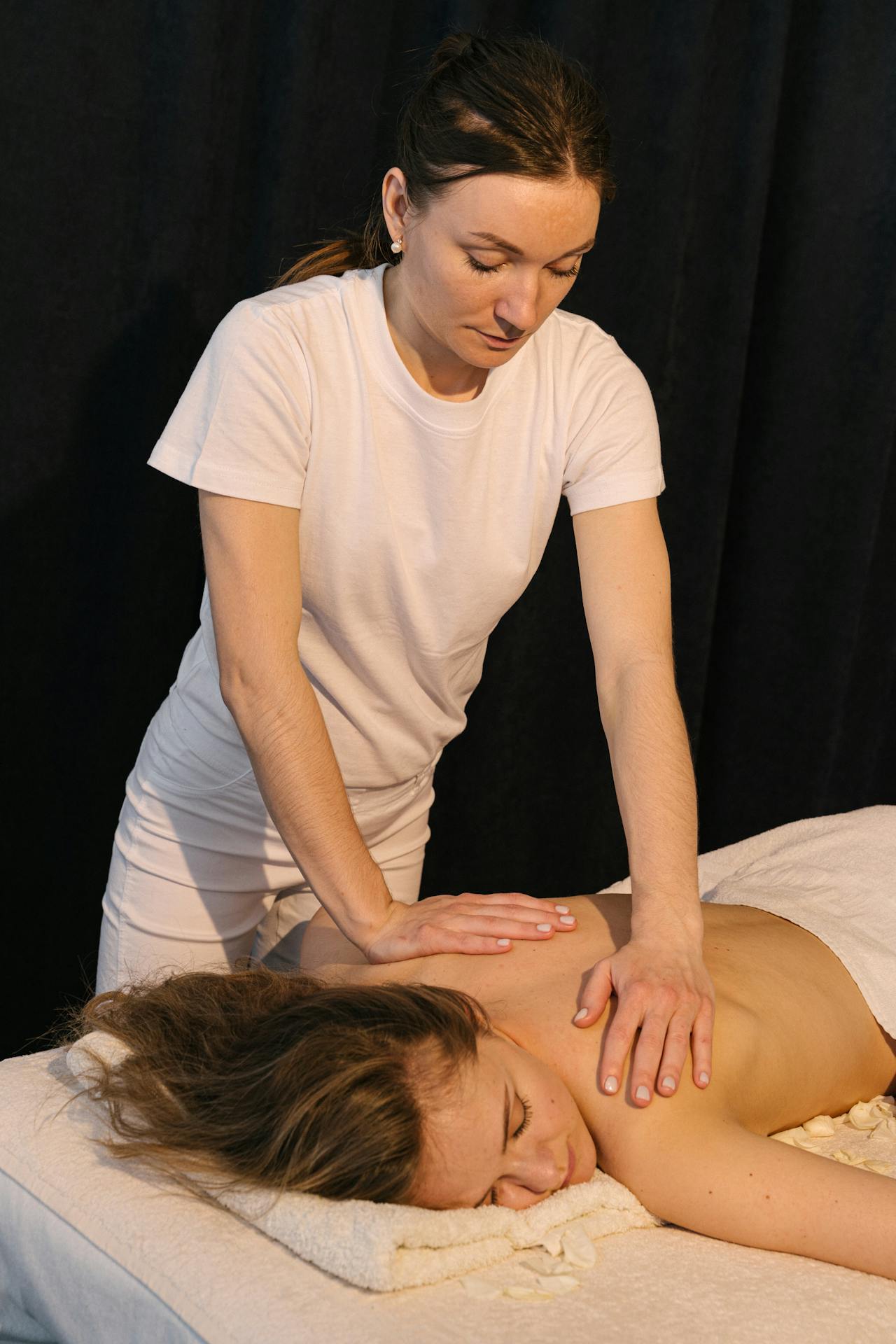
Myofascial release is a slow, sustained, dry-skin technique that targets fascia — the connective tissue sheet that wraps every muscle, organ, and nerve in the body. The therapist applies light to moderate pressure (typically 5 grams to 5 pounds) and holds it for 90 to 180 seconds per restriction. The hold is the entire technique — there is no kneading, no oil, no rapid stroking.
When fascia is held under sustained low load, the collagen fibers begin to reorganize and the ground substance softens, restoring slide between adjacent tissue layers. Research published in the Journal of Bodywork and Movement Therapies shows that a 90-second hold is the minimum effective dose for measurable change in tissue elasticity.
The classic clinical signs MFR is the right call:
What Trigger Point Therapy Actually Is
A trigger point is a discrete, hyper-irritable nodule in a taut muscle band that, when pressed, reproduces a referred pain pattern in a predictable location. Travell and Simons mapped roughly 600 of these patterns across the body in their landmark medical text, and the maps still guide most NCBTMB-certified trigger point work today.
Treatment is direct, sustained ischemic compression — the therapist locates the nodule, presses with thumb, knuckle, or elbow at a 5 to 8 out of 10 pressure, and holds for 30 to 90 seconds until the pain begins to fade. The session usually addresses 4 to 8 trigger points over 30 to 60 minutes.
The classic clinical signs TPT is the right call:
How the Two Differ Hands-On
Many clients book "deep tissue" expecting one and get the other. Here is how to read the room in your first 10 minutes on the table.
A myofascial release therapist will:
A trigger point therapist will:
Pricing in 2026: National Averages and Regional Spread
National 2026 averages from Zoca's massagenearme network of 1,400 LMTs across 92 US cities:
| Service | Price Range | Duration | Best For |
|---|---|---|---|
| Myofascial release (60 min) | $95 to $175 | 60 min | Diffuse stiffness, scar tissue, post-surgical |
| Myofascial release (90 min) | $135 to $240 | 90 min | Multi-region work, comprehensive sessions |
| Trigger point therapy (30 min) | $55 to $95 | 30 min | Targeted, single-issue work |
| Trigger point therapy (60 min) | $75 to $160 | 60 min | Multiple trigger points across one region |
| Combined MFR + TPT session | $120 to $190 | 75 min | Chronic pain pattern, first-time clinical visit |
| 4-session pain protocol package | $420 to $720 | 60 min each | Treatment plan with re-assessment |
Manhattan, San Francisco, and Boston run 35 to 50 percent above national averages. The most affordable major US metros for clinical massage are Pittsburgh, Cincinnati, and San Antonio.
Which Conditions Respond Best to Each
Common conditions and which modality the NCBTMB most often recommends as first-line.
Myofascial release is the typical first choice for:
Trigger point therapy is the typical first choice for:
What to Expect After Each Session
Most clients underestimate the post-session soreness from trigger point therapy. The American Academy of Manual Medicine reports that 48 to 60 percent of TPT patients experience a "treatment response" of mild to moderate soreness lasting 24 to 72 hours. This is normal, not a complication.
After myofascial release:
After trigger point therapy:
How to Choose a Qualified Therapist
The American Massage Therapy Association and the NCBTMB maintain searchable directories of credentialed clinicians. For specialized work, look for the following.
For myofascial release: John F. Barnes MFR certification, Stecco Fascial Manipulation, or Anatomy Trains certification. Hospital-affiliated PT clinics also employ certified MFR practitioners.
For trigger point therapy: NCBTMB-recognized continuing education in Travell and Simons methodology, or certification through the National Association of Myofascial Trigger Point Therapists. Many top trigger point specialists also hold a Dry Needling certification, which is restricted to PTs and chiropractors in 38 states.
Browse the best massage providers in your state or compare the deeper Swedish vs deep tissue cost breakdown, our Thai vs Shiatsu guide, and the sports massage pricing breakdown.
The Bottom Line
If your pain pattern is diffuse, surgical, or "everywhere on one side," book a 60- to 90-minute myofascial release session and budget $115 to $175. If you can put one finger on the spot and reproduce a referring pattern, book a 30- to 60-minute trigger point therapy session and budget $75 to $160. If you do not know which you have, book a 75-minute combined MFR plus TPT visit with an LMT credentialed in both — the $120 to $190 spend is the cheapest way to figure out which modality your body responds to before committing to a four-session protocol.
The massagenearme directory lists NCBTMB-credentialed LMTs across the US, with filters for modality, price, and session length.
More Ways to Look and Feel Your Best
Beyond massage therapy, there is a whole world of beauty and wellness waiting for you:
Frequently asked questions
How much does myofascial release cost in 2026?
Is trigger point therapy supposed to hurt?
How many myofascial release sessions will I need?
Can I get both myofascial release and trigger point therapy in one session?
What is the difference between trigger point therapy and dry needling?
Will insurance cover myofascial release or trigger point therapy?
Is myofascial release safe during pregnancy?
How soon will I feel relief after a trigger point session?
What should I wear for a myofascial release session?
Are myofascial release and trigger point therapy evidence-based?
How do I find a certified myofascial release therapist near me?
Need a provider in Nationwide?
Browse our directory and book directly with local businesses.
Browse the directoryRelated articles
Aromatherapy Massage 2026: Essential Oils, Cost, Benefits
Aromatherapy massage costs $110–$220 per session in 2026; here is what the evidence says, which oils are used, and who should ask for a different modality.
Ashiatsu vs Deep Tissue: Which Massage Goes Deeper
Ashiatsu reaches 2-3x the depth of hand-based deep tissue at $90-$180 per 60 min. See pressure, cost, and which modality suits you. Compare.
Best Massage in Atlanta, GA — 2026 Guide
Everything you need to know about massage & bodywork in Atlanta, GA — from choosing the right service to finding providers locals actually recommend. Pricing, FAQs, and booking links included.